Disorder with optical function
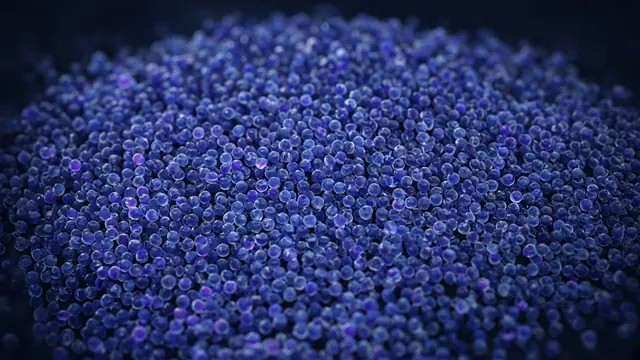
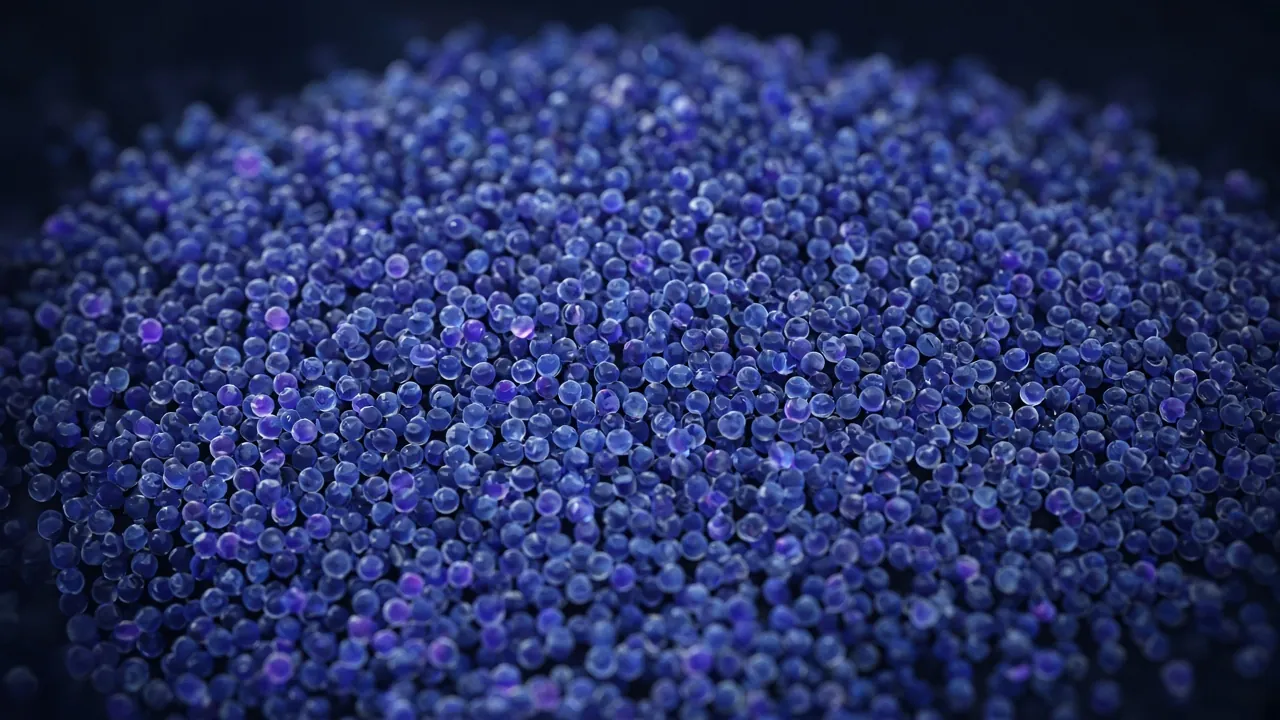
A photonic glass is a disordered arrangement of scattering particles. Unlike a periodic photonic crystal, it keeps local structural correlations without long-range translational order. The term was introduced for this class of random optical material in 2007.1
Particle and ensemble response
Individual particles scatter light according to size, shape and refractive-index contrast, while correlations between particles shape collective scattering. Studies of resonant transport show how Mie modes in the particles govern light propagation.2
Assembly and design
Colloidal assembly, particle-size control and packing conditions tune structural correlations, while thickness, absorption and index contrast set the optical response. Work on calibrated photonic glasses relates structural colour to these parameters.3
A platform for nanophotonics
Disordered architectures are studied for structural colour, resonant scattering and random lasing; a 2010 review framed photonic glasses as a materials platform for all three.4
Sources
- Photonic Glass: A Novel Random Material for LightAdvanced Materials · 2007
- Resonant light transport through Mie modes in photonic glassesPhysical Review A · 2008
- The Structural Colors of Photonic GlassesUniversity of Cambridge repository
- Photonic Glasses: A Step Beyond White PaintAdvanced Materials · 2010