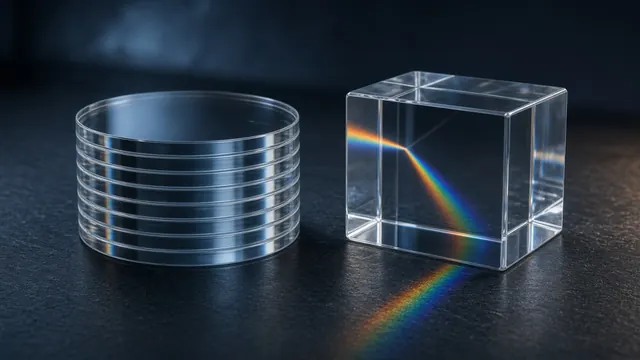
01 · Optical materials
Glass engineered for light
Composition, gain and precision fabrication behind lenses, lasers, fibres and high-index waveguide wafers.
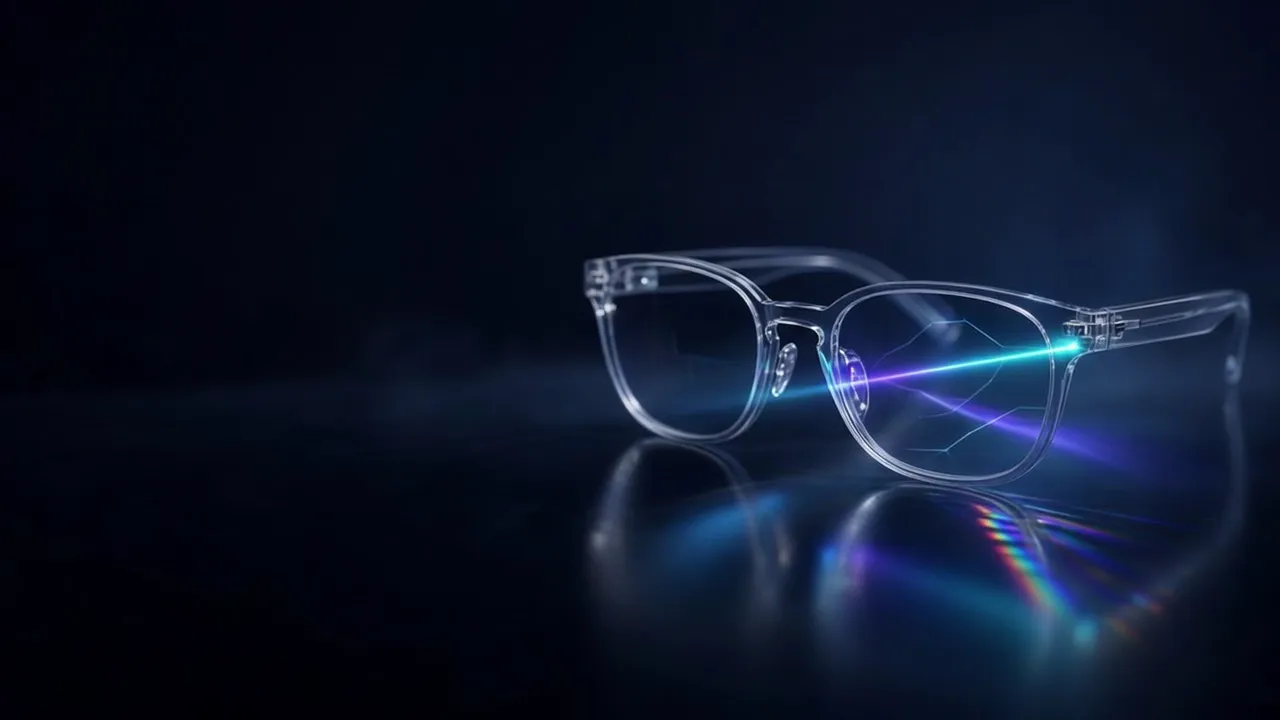
Engineering light. Transforming vision.
From high-index optical glass and disordered light-scattering materials to the waveguides inside AI-era smart glasses, photonic glass is where materials science becomes the next visual interface.
refractive index of SCHOTT RealView® 2.0 lightweight AR wafers, at under 4 g/cm³
SCHOTT · Sep 2026RealView® high-index glass wafers shipped for AR, per SCHOTT
SCHOTTfield of view from a metasurface-waveguide AR glasses prototype
Nature · Nov 2026thick flat-panel laser display driven by a visible photonic chip
Nature · Aug 2025Photonic glasses is an established term in optical materials science and in nanophotonics, and the most natural name for photonics-powered eyewear.
Composition, gain and precision fabrication behind lenses, lasers, fibres and high-index waveguide wafers.
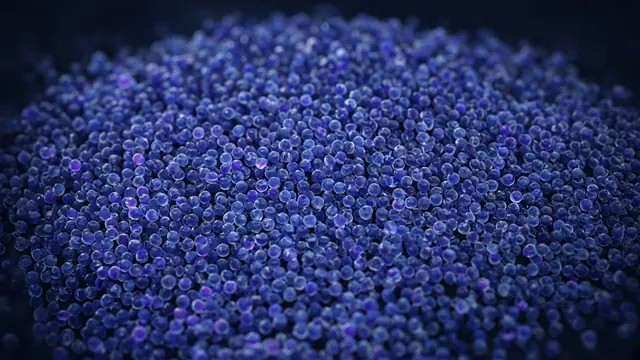
Disordered colloidal photonic glasses: angle-independent structural colour, resonant scattering and random lasers.
Waveguides, photonic light engines and the manufacturing scale-up behind AR and AI smart glasses.
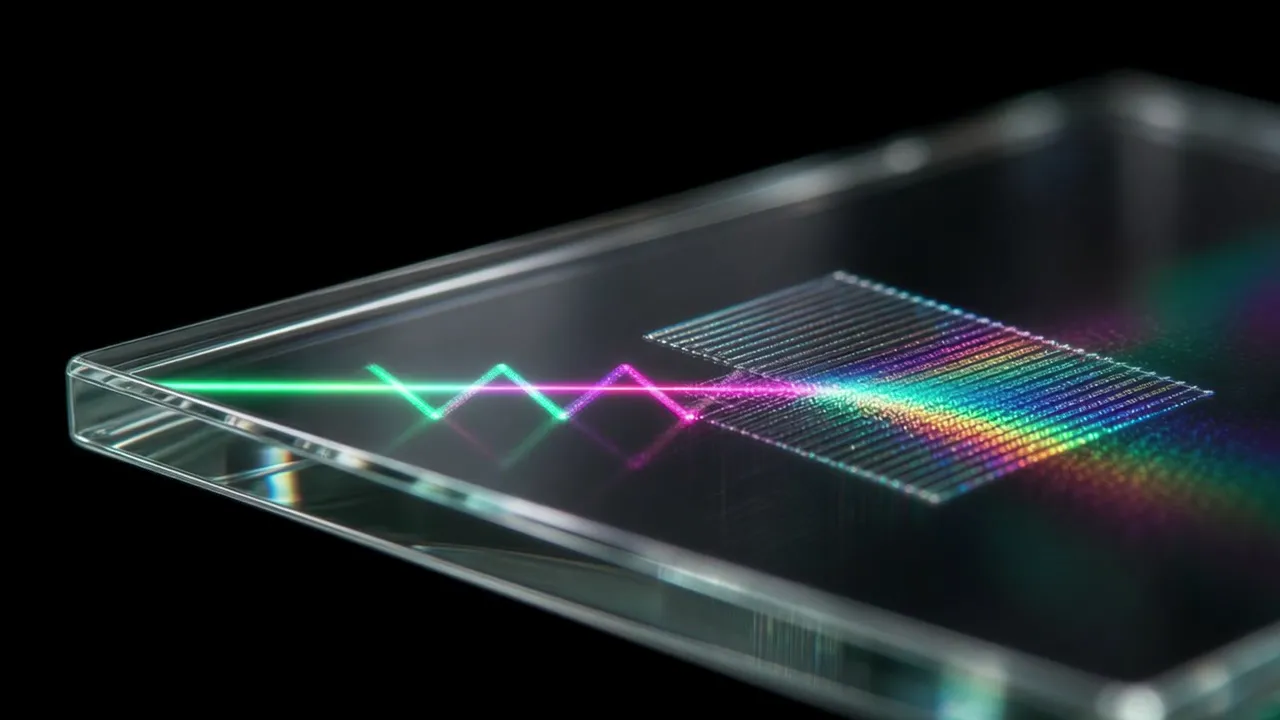
In AR glasses the lens is a waveguide: a sliver of high-index glass that carries an image from a tiny light engine to the eye.
SCHOTT moved geometric reflective waveguides into serial production for consumer AR wearables in September 2025.1
A November 2026 Nature paper shows all-day AR glasses with a dual-layer metasurface waveguide: 30° field of view and an 8 × 8 mm eyebox.2
EssilorLuxottica and Applied Materials signed a long-term joint development agreement on AR waveguides, adaptive lenses and materials in June 2026.3
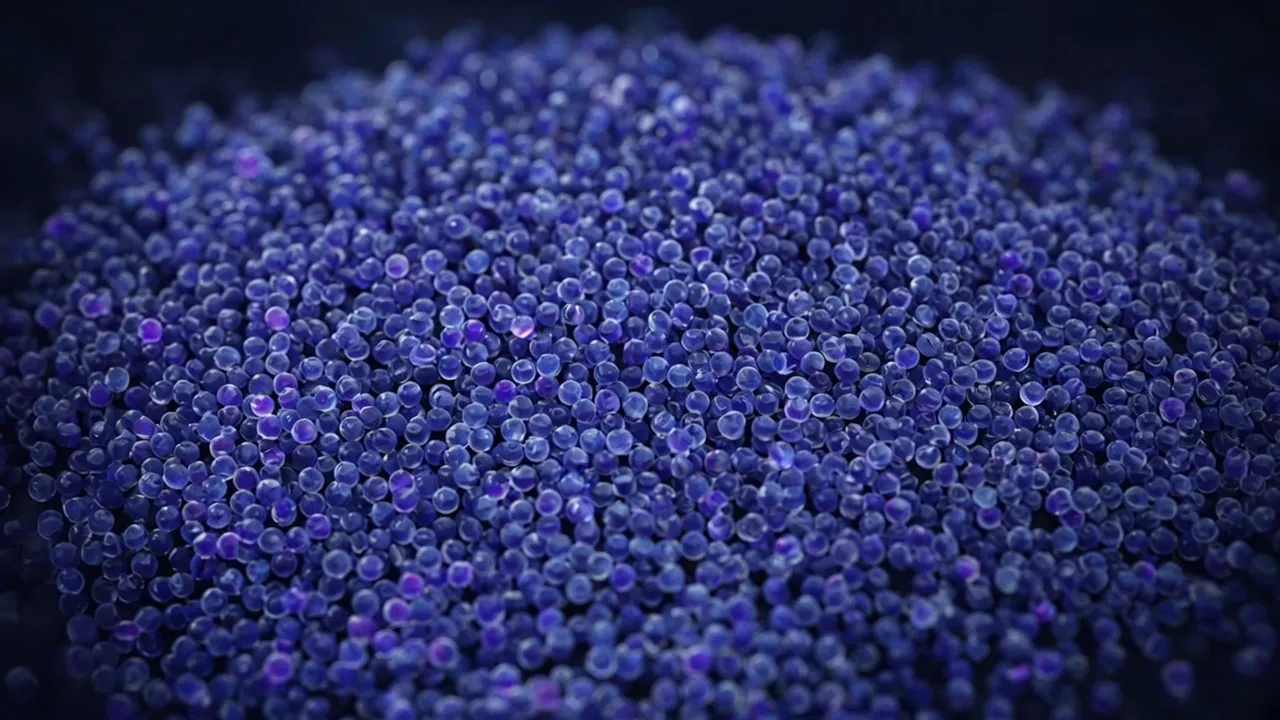
Disordered photonic glasses turn packed nanospheres into colour that holds from every angle.
Photonic glasses create colour through short-range structural order, with weak dependence on viewing angle.4
After research traced weak reds to short-wavelength scattering, a 2026 PNAS study reported metallodielectric photonic-glass paints with saturated colour across the full visible spectrum.56
Selected developments in materials engineering and wearable optics, linked to original sources.
Nature's Perspective maps how chip-scale photonics can close the gap in AR display hardware, from components to scalable manufacturing.
Read the sourceRealView® 2.0 lightweight: index ≈2.0, density under 4 g/cm³, available in wafers up to 300 mm.
Read the sourceVitrealab formed an industry advisory board to commercialise its Quantum Light Chip for laser–LCoS AR light engines.
Read the sourceIn materials science the term covers two established fields: optical glass media engineered for photonic devices such as lasers, amplifiers and fibres, and, in nanophotonics, disordered packings of scattering particles that produce structural colour and unusual light transport.
AR and AI glasses rely on glass optics, including high-index waveguide wafers, waveguides and photonic light engines, to place an image in front of the eye while keeping the world in view.
Yes. PhotonicGlasses.com is available for strategic acquisition via Chanakya.vip, with transactions completed through a recognised escrow service.
An exact-match .com at the intersection of optical glass, engineered light and intelligent eyewear. Available for strategic acquisition via Chanakya.vip.